
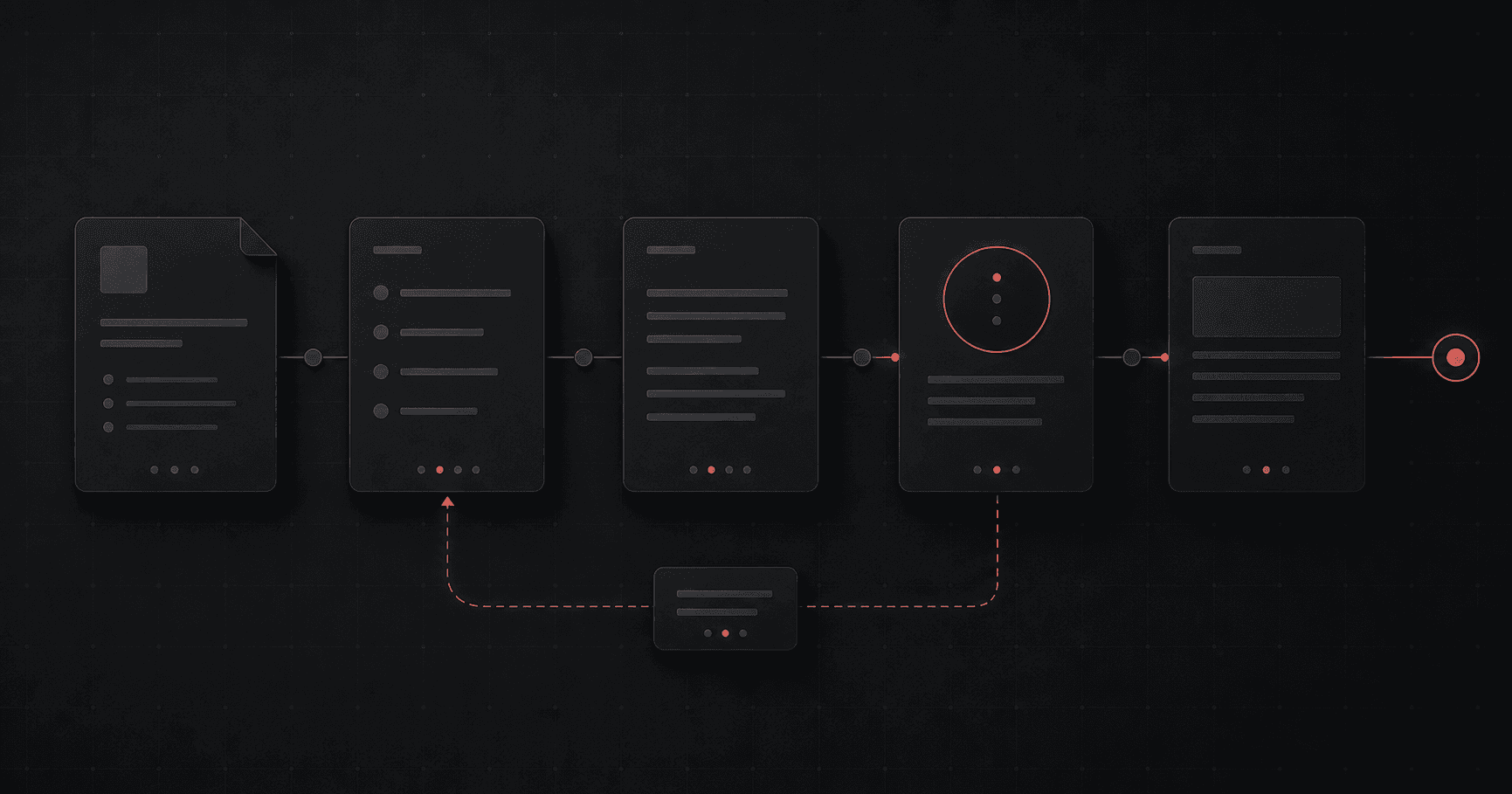
How to Build a Lean Content Workflow With AI Agents
How to Build a Lean Content Workflow With AI Agents
AI can make content production faster. It can also make content worse at scale.
The difference is workflow.
If you ask an agent to "write SEO posts," you will usually get generic content. If you give the agent a strategy, source material, topic map, quality rules, and review process, it can help a small SaaS team produce useful content consistently.
The goal is not to automate taste. The goal is to reduce operational drag around good editorial decisions.
Start With A Source Of Truth
A content workflow needs a strategy document.
It should define:
- audience
- product positioning
- content pillars
- topics to avoid
- tone
- internal linking rules
- quality bar
- claims the product can make
- claims the product should not make
Without this, every agent run starts from a blank page. That is how you get repetitive intros, generic frameworks, and inconsistent product language.
For the AgentRef blog, the source of truth is simple: help founders turn fast AI-assisted product creation into real distribution, trust, and revenue. Affiliate management is part of that story, but not the whole publication.
Separate Research From Writing
Do not let one pass do everything.
A better workflow:
- Research current context.
- Pick a topic and angle.
- Create a brief.
- Write the draft.
- Review against quality rules.
- Add internal links and metadata.
- Decide publish date.
- Generate or attach cover image.
- Run QA.
Agents can help at each step, but the steps should stay visible.
This prevents a common failure: a post that looks polished but has no reason to exist.
Use Briefs, Not Just Titles
A title is not enough context.
A good brief includes:
- target reader
- search or AI-search intent
- central thesis
- what the post should not become
- outline
- examples to include
- internal links
- external source context
- conversion or trust goal
For example, "Referral Program vs Affiliate Program for SaaS" should not become a generic definition article. It should help a founder choose the right distribution model, understand operational overhead, and decide whether affiliate management is necessary.
That brief makes the draft sharper.
Add A Review Pass
Every AI-assisted post should be reviewed after writing.
Ask:
- Is the thesis clear?
- Does every section help the reader decide something?
- Is there concrete SaaS context?
- Does the post avoid generic AI language?
- Are internal links natural?
- Does the title match the content?
- Is there a reason this post belongs on this site?
- Would an AI assistant be able to summarize it accurately?
If the answer is weak, rewrite before publishing.
This matters for SEO and GEO. Search and AI systems do not need more generic pages. They need clear, useful, well-structured pages with a reason to exist.
Let Agents Handle The Boring Checks
Agents are especially useful for quality gates.
They can check:
- missing H2s
- weak descriptions
- duplicate titles
- missing internal links
- broken cover paths
- unfinished draft phrases
- inconsistent product wording
- publish date mistakes
- topic cluster coverage
Some of this should be automated in scripts. Some can be agent-reviewed.
For example, AgentRef uses a blog quality gate so published posts cannot silently ship as thin unfinished content. That is the kind of automation that improves editorial quality instead of replacing it.
Keep Publishing Deliberate
Do not publish thirty posts at once just because AI can write them.
A better cadence is:
- produce in batches
- schedule gradually
- keep future posts hidden until their publish date
- update topic hubs and internal links as the cluster grows
- review performance and search visibility
- improve old posts before flooding new ones
The output should look like a serious publication, not an automated dump.
Key Takeaways
A lean AI content workflow is structured, not magical.
Use a source of truth. Separate research, briefing, drafting, review, metadata, covers, and QA. Let agents reduce operational drag, but keep strategy and judgment human-reviewed.
The teams that win with AI-assisted content will not be the ones publishing the most. They will be the ones publishing the clearest useful material with the least wasted motion.